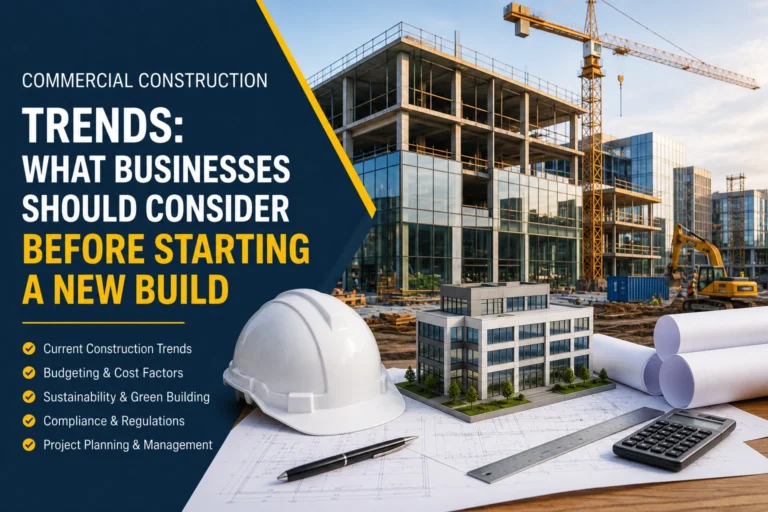
Commercial construction projects represent a significant strategic investment for businesses, developers, and property owners. Unlike residential construction, commercial developments often involve greater regulatory complexity, larger budgets, longer project timelines, and higher stakeholder expectations. As market conditions, technologies, and sustainability standards continue to evolve, understanding current construction trends has become increasingly important for organizations planning new commercial facilities.
Whether developing office buildings, retail centers, industrial facilities, warehouses, healthcare institutions, or mixed-use developments, successful projects require careful planning and a clear understanding of both current industry practices and future market demands.
This guide explores the major considerations businesses should evaluate before commencing a commercial construction project, including emerging trends, financial planning, regulatory compliance, sustainability initiatives, and project delivery strategies.
Understanding the Objectives of a Commercial Construction Project
Every successful commercial development begins with clearly defined business objectives. Unlike purely functional construction projects, commercial developments are typically designed to achieve strategic organizational goals.
Before proceeding with planning and design, stakeholders should establish:
- The primary purpose of the development
- Long-term operational requirements
- Expected return on investment
- Target occupancy or utilization rates
- Future expansion opportunities
- Sustainability objectives
- Brand and customer experience considerations
Clearly defined objectives provide direction throughout the project lifecycle and help decision-makers evaluate competing priorities more effectively.
The Growing Importance of Flexible Building Design
One of the most significant trends influencing modern commercial construction is flexibility. Businesses increasingly require facilities that can adapt to changing operational requirements, workforce dynamics, and technological advancements.
Modern commercial buildings often incorporate:
- Modular interior layouts
- Expandable floor plans
- Multi-purpose workspaces
- Flexible utility systems
- Adaptable structural designs
- Reconfigurable office environments
Flexible design strategies allow organizations to reduce future renovation costs while extending the useful life of commercial assets.
Benefits of Flexible Commercial Spaces
Businesses investing in adaptable facilities may experience:
- Lower long-term operating costs
- Reduced renovation expenses
- Improved workforce productivity
- Greater tenant appeal
- Enhanced asset value
- Increased operational resilience
As market conditions continue to evolve, flexibility has become an essential component of commercial property planning.
Budgeting and Financial Planning Considerations
Commercial construction projects involve numerous financial variables that extend beyond initial construction costs. Comprehensive financial planning helps minimize unexpected expenses and supports informed investment decisions.
Typical budget categories include:
- Land acquisition costs
- Design and consulting fees
- Engineering services
- Permits and regulatory approvals
- Construction materials
- Labor expenses
- Equipment procurement
- Utility infrastructure
- Technology integration
- Site development
- Landscaping
- Contingency reserves
Financial planning should also account for:
- Inflationary pressures
- Supply chain fluctuations
- Interest rates
- Financing costs
- Insurance requirements
- Operational transition expenses
Many commercial developers allocate contingency budgets ranging between 10% and 15% of total project costs to accommodate unforeseen circumstances.
Sustainability and Green Building Practices
Sustainability has evolved from a competitive advantage into a core business requirement across many industries. Organizations increasingly prioritize environmentally responsible construction practices to reduce operating costs, satisfy regulatory requirements, and meet stakeholder expectations.
Common sustainable construction initiatives include:
- Energy-efficient building envelopes
- High-performance glazing systems
- Solar energy integration
- Rainwater harvesting systems
- LED lighting solutions
- Smart energy management systems
- Sustainable construction materials
- Efficient HVAC technologies
- Electric vehicle charging infrastructure
- Waste reduction programs
Advantages of Sustainable Commercial Construction
Sustainable facilities may provide several long-term benefits:
- Reduced energy consumption
- Lower operating costs
- Improved environmental performance
- Enhanced employee well-being
- Increased property value
- Greater investor confidence
- Stronger corporate reputation
As environmental regulations continue to expand globally, sustainability planning has become a critical aspect of commercial project development.
Technology and Smart Building Integration
Technology has become a central component of modern commercial construction projects. Businesses increasingly seek facilities capable of supporting digital operations, automation, and data-driven management systems.
Examples of smart building technologies include:
- Automated lighting systems
- Intelligent climate control systems
- Occupancy monitoring sensors
- Building management platforms
- Security and access control systems
- Predictive maintenance software
- Energy monitoring systems
- Smart parking solutions
Integrating technology during the design phase is often more cost-effective than retrofitting systems after construction completion.
Regulatory Compliance and Risk Management
Commercial construction projects operate within complex regulatory environments. Failure to address compliance requirements early can result in significant delays, financial penalties, and operational disruptions.
Regulatory considerations may include:
- Building codes
- Fire safety regulations
- Accessibility requirements
- Environmental regulations
- Occupational health and safety standards
- Energy efficiency requirements
- Zoning restrictions
- Local planning approvals
Early engagement with regulatory authorities, consultants, and legal advisors can substantially reduce project risks.
Construction Delivery Methods
Selecting the appropriate project delivery model can significantly influence project outcomes, timelines, and budgets.
Common commercial construction delivery methods include:
Design-Bid-Build
This traditional approach separates design and construction responsibilities.
Advantages:
- Clear contractual structure
- Competitive bidding opportunities
- Well-defined project scope
Challenges:
- Longer project schedules
- Reduced collaboration between stakeholders
Design-Build
Under this approach, a single entity manages both design and construction services.
Advantages:
- Faster project delivery
- Improved communication
- Greater cost certainty
Challenges:
- Reduced owner control over design details
Construction Management
A construction manager oversees the project while coordinating multiple contractors and consultants.
Advantages:
- Increased flexibility
- Enhanced project oversight
- Greater stakeholder involvement
Challenges:
- More complex management requirements
Selecting the appropriate delivery method depends on project size, budget, complexity, and organizational objectives.
Supply Chain and Material Availability Challenges
Recent years have highlighted the importance of supply chain planning within the construction industry. Material shortages, transportation disruptions, and market volatility can significantly impact project schedules and budgets.
Materials commonly affected by supply fluctuations include:
- Structural steel
- Concrete products
- Electrical components
- Mechanical equipment
- Timber products
- Glass systems
- Finishing materials
To mitigate these risks, project teams increasingly employ:
- Early procurement strategies
- Multiple supplier sourcing
- Long-term purchasing agreements
- Detailed inventory planning
- Schedule contingency measures
Proactive procurement planning has become an essential component of commercial construction management.
Workforce and Labor Considerations
Labor availability continues to influence commercial construction projects worldwide. Skilled labor shortages can contribute to schedule delays, increased costs, and reduced productivity.
Businesses should consider:
- Contractor workforce capacity
- Specialized trade availability
- Labor market conditions
- Safety training standards
- Workforce retention strategies
- Project supervision capabilities
Experienced contractors often maintain established labor networks, helping reduce workforce-related project risks.
The Importance of Effective Project Management
Commercial construction projects involve numerous stakeholders, including property owners, investors, architects, engineers, contractors, suppliers, regulators, and consultants.
Successful project management requires:
- Clear communication procedures
- Detailed scheduling systems
- Budget monitoring processes
- Quality assurance programs
- Risk management strategies
- Progress reporting mechanisms
- Change management procedures
Strong project leadership helps ensure that objectives remain aligned throughout the construction process.
Common Mistakes Businesses Should Avoid
Even well-funded commercial projects can encounter challenges when planning is insufficient.
Common mistakes include:
- Underestimating project costs
- Ignoring future operational requirements
- Delaying regulatory approvals
- Selecting contractors solely based on price
- Neglecting sustainability considerations
- Failing to manage project risks
- Poor stakeholder communication
- Inadequate contingency planning
Avoiding these mistakes often determines whether a project meets its financial and operational objectives.
Final Thoughts
Commercial construction projects require careful planning, informed decision-making, and effective collaboration among numerous stakeholders. As construction technologies, sustainability requirements, and market expectations continue to evolve, businesses must adopt a strategic approach that balances current needs with long-term objectives.
By understanding emerging industry trends, implementing comprehensive financial planning, prioritizing sustainability, and engaging experienced professionals, organizations can significantly improve the likelihood of delivering successful commercial developments.
Ultimately, the most successful commercial construction projects are those that combine strong planning, practical execution, and a clear vision for the future.