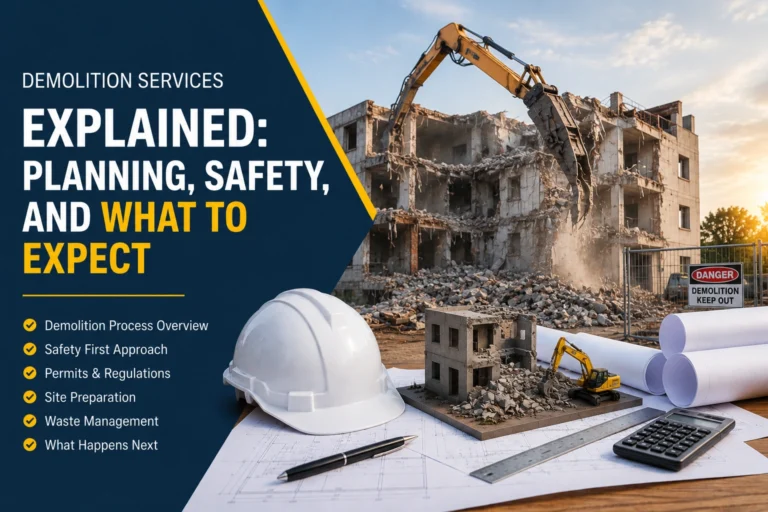
Demolition is often perceived simply as the process of tearing down structures. In reality, modern demolition services involve a highly regulated, carefully planned, and technically complex operation that requires extensive preparation, specialized equipment, and strict adherence to safety standards. Whether demolishing a residential property, a commercial building, an industrial facility, or preparing a site for redevelopment, successful demolition projects rely on strategic planning and experienced execution.
The demolition phase frequently represents the first critical step in the construction lifecycle. When performed correctly, it creates a safe, efficient, and compliant foundation for future development while minimizing risks to workers, surrounding properties, and the environment.
This guide explores the demolition process, the planning involved, safety considerations, regulatory requirements, and what property owners and developers should expect before, during, and after a demolition project.
Understanding Modern Demolition Services
Demolition services encompass much more than the physical removal of structures. Professional demolition contractors provide comprehensive project management services that address planning, environmental protection, safety, waste management, and site preparation.
Common demolition services include:
- Residential building demolition
- Commercial building demolition
- Industrial facility demolition
- Interior strip-outs
- Structural dismantling
- Selective demolition
- Emergency demolition
- Site clearing and preparation
- Concrete removal
- Excavation and remediation services
The approach selected depends on various factors, including the size of the structure, location, surrounding environment, and future site requirements.
Initial Project Assessment and Planning
Every successful demolition project begins with a comprehensive site assessment. This planning phase identifies potential risks, determines the appropriate demolition methods, and ensures compliance with regulatory requirements.
During the assessment stage, demolition specialists typically evaluate:
- Building size and structure
- Construction materials
- Site accessibility
- Nearby structures
- Utility connections
- Environmental hazards
- Traffic management requirements
- Waste disposal considerations
The information collected during this phase forms the basis of the demolition plan and helps establish realistic timelines and budgets.
Key Objectives of Pre-Demolition Planning
Effective planning aims to:
- Protect workers and the public
- Minimize environmental impacts
- Reduce project delays
- Control project costs
- Ensure regulatory compliance
- Improve operational efficiency
- Facilitate future construction activities
Comprehensive planning often determines the overall success of the demolition project.
Obtaining Permits and Regulatory Approvals
Demolition projects are subject to numerous regulations and approval processes. Property owners and contractors must ensure that all required permits are secured before work begins.
Common approvals may include:
- Demolition permits
- Environmental permits
- Utility disconnection approvals
- Traffic management approvals
- Waste disposal authorizations
- Heritage or conservation clearances
- Occupational safety approvals
Failure to obtain proper approvals can result in:
- Project shutdowns
- Financial penalties
- Legal complications
- Delays to redevelopment schedules
Experienced demolition contractors typically assist clients throughout the permitting process to ensure compliance with all applicable regulations.
Hazardous Material Identification and Removal
One of the most critical aspects of demolition planning involves identifying hazardous materials that may be present within existing structures.
Potential hazardous materials can include:
- Asbestos-containing materials
- Lead-based paint
- Mold contamination
- Chemical residues
- Underground storage tanks
- Hazardous industrial waste
- Contaminated soils
Asbestos Management
In many older buildings, asbestos remains one of the most significant safety concerns. Prior to demolition, certified inspections are often conducted to identify asbestos-containing materials.
If asbestos is present, specialized removal procedures must be completed before demolition activities can proceed.
Hazardous material management helps ensure:
- Worker safety
- Public safety
- Environmental protection
- Regulatory compliance
- Proper waste disposal
Neglecting this stage can create significant health, financial, and legal risks.
Utility Disconnection and Site Preparation
Before demolition begins, all active utility services must be safely disconnected and verified.
Utilities commonly requiring disconnection include:
- Electricity
- Natural gas
- Water supply
- Sewer systems
- Telecommunications
- Internet infrastructure
- Fire protection systems
Additional site preparation activities may include:
- Installing safety fencing
- Establishing exclusion zones
- Implementing dust control measures
- Preparing equipment access routes
- Conducting structural assessments
- Installing traffic management systems
Proper site preparation significantly improves operational safety and efficiency.
Demolition Methods and Techniques
The demolition method selected depends on multiple project-specific factors, including structure size, location, material composition, and surrounding conditions.
Mechanical Demolition
Mechanical demolition is the most common approach and involves the use of heavy machinery such as:
- Excavators
- Hydraulic breakers
- Bulldozers
- Loaders
- High-reach demolition equipment
Benefits include:
- High efficiency
- Reduced project timelines
- Controlled dismantling
- Lower labor requirements
Selective Demolition
Selective demolition involves carefully removing specific building components while preserving portions of the existing structure.
This method is often used for:
- Renovation projects
- Interior refurbishments
- Historic building preservation
- Structural modifications
Selective demolition requires detailed planning and precise execution.
Manual Demolition
In certain situations, structures must be dismantled manually due to accessibility restrictions, safety concerns, or preservation requirements.
Manual demolition provides:
- Greater precision
- Reduced environmental impact
- Improved material recovery
- Enhanced protection of surrounding structures
Although more labor-intensive, manual demolition remains essential for certain specialized projects.
Safety Considerations During Demolition
Demolition activities present numerous safety risks that require careful management.
Potential hazards include:
- Structural collapse
- Falling debris
- Dust exposure
- Equipment accidents
- Utility strikes
- Noise hazards
- Fire risks
- Environmental contamination
Professional demolition contractors implement comprehensive safety procedures that may include:
- Site-specific safety plans
- Personal protective equipment requirements
- Fall protection systems
- Equipment inspections
- Dust suppression measures
- Emergency response planning
- Daily safety briefings
- Continuous site monitoring
Safety remains the highest priority throughout every phase of the demolition process.
Environmental Protection and Waste Management
Modern demolition practices increasingly emphasize environmental responsibility and sustainable waste management.
Rather than disposing of all materials as waste, contractors often prioritize material recovery and recycling.
Materials commonly recycled include:
- Concrete
- Steel
- Timber
- Brick
- Asphalt
- Glass
- Aluminum
- Copper
Benefits of Construction Waste Recycling
Recycling demolition materials can provide several advantages:
- Reduced landfill usage
- Lower disposal costs
- Improved environmental performance
- Reduced carbon emissions
- Greater resource efficiency
- Enhanced project sustainability
Many demolition projects now incorporate waste diversion targets as part of their environmental management plans.
What Property Owners Should Expect During Demolition
Although every project differs, most demolition operations follow a similar sequence.
Typical Demolition Process
Step 1: Site Assessment
- Site inspections
- Structural evaluations
- Hazard identification
Step 2: Planning and Approvals
- Permit applications
- Engineering assessments
- Safety planning
Step 3: Hazardous Material Removal
- Asbestos removal
- Environmental remediation
- Waste management planning
Step 4: Utility Disconnections
- Service terminations
- Site isolation procedures
Step 5: Physical Demolition
- Structural removal
- Material separation
- Debris management
Step 6: Site Clearing
- Waste removal
- Final grading
- Site preparation
Understanding this process helps property owners establish realistic expectations regarding timelines and project activities.
Common Challenges in Demolition Projects
Despite careful planning, demolition projects can encounter unexpected challenges.
Examples include:
- Hidden structural conditions
- Unknown underground services
- Hazardous material discoveries
- Adverse weather conditions
- Regulatory delays
- Equipment failures
- Environmental restrictions
- Unexpected site contamination
Experienced contractors prepare contingency plans to minimize disruptions and maintain project schedules.
Preparing the Site for Future Construction
The completion of demolition marks the beginning of the next stage of development. Following structural removal, additional site preparation activities may be required.
These activities often include:
- Soil remediation
- Excavation
- Grading and leveling
- Utility installation
- Drainage improvements
- Compaction testing
- Foundation preparation
Proper post-demolition preparation helps ensure that future construction activities can commence safely and efficiently.
Final Thoughts
Demolition projects require far more than heavy machinery and structural removal. Successful demolition operations depend on careful planning, regulatory compliance, environmental responsibility, comprehensive safety management, and experienced project execution.
Whether preparing a residential property for redevelopment, clearing a commercial site, or dismantling an industrial facility, property owners benefit significantly from working with qualified demolition professionals who understand the complexities of modern demolition practices.
By prioritizing safety, planning thoroughly, and maintaining compliance throughout the process, demolition projects can provide a safe and effective foundation for future construction and development.