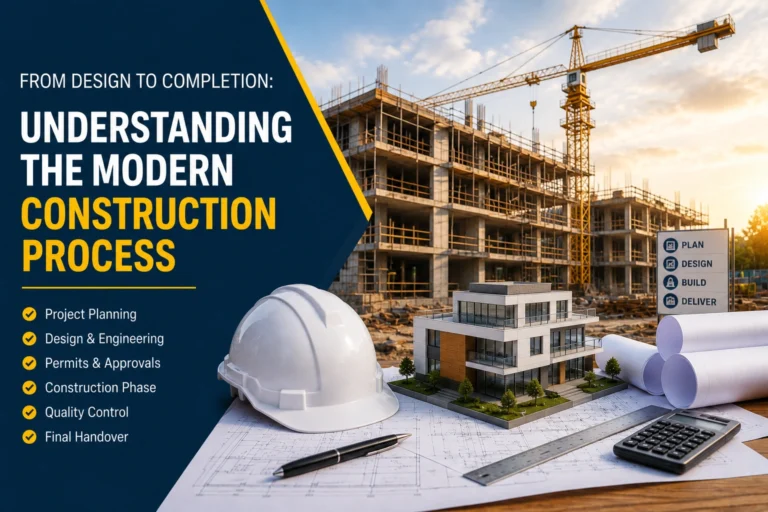
Construction projects have evolved significantly over the past several decades. Advances in technology, changes in regulatory requirements, growing sustainability expectations, and increasingly complex project demands have transformed the way residential, commercial, and industrial developments are planned and delivered. Modern construction is no longer simply about building structures; it is a comprehensive process involving strategic planning, collaboration, engineering expertise, project management, and quality control.
Whether constructing a family home, a commercial facility, a multi-unit development, or an industrial complex, every successful project follows a structured process designed to minimize risk, optimize resources, and ensure quality outcomes. Understanding the various stages of the modern construction process can help property owners, developers, and stakeholders make informed decisions and maintain realistic expectations throughout the project lifecycle.
This guide explores the key phases involved in modern construction, from initial planning and design through to project completion and handover.
The Importance of Planning Before Construction Begins
The success of any construction project is largely determined long before physical work begins on-site. Proper planning establishes the framework for decision-making, budgeting, scheduling, and risk management throughout the project.
During the initial planning phase, project teams typically focus on:
- Defining project objectives
- Establishing budgets
- Assessing project feasibility
- Identifying site requirements
- Evaluating potential risks
- Developing preliminary timelines
- Determining regulatory requirements
- Selecting project stakeholders
Investing sufficient time during the planning phase can significantly reduce costly delays and changes during construction.
Key Questions During Project Planning
Before moving into design, project owners should consider:
- What are the primary goals of the project?
- What budget constraints exist?
- What timeline expectations are realistic?
- What regulatory approvals will be required?
- What level of quality and finish is expected?
- Are future expansions anticipated?
- What sustainability goals should be incorporated?
Clear answers to these questions help establish a strong foundation for the remainder of the project.
Phase One: Concept Development and Design
The design phase transforms project ideas into practical construction solutions. This stage requires close collaboration between property owners, architects, engineers, and consultants.
The design process generally includes:
- Initial concept development
- Site analysis
- Preliminary drawings
- Design revisions
- Structural planning
- Building systems design
- Material selection
- Final construction documentation
Design Professionals Commonly Involved
Modern construction projects often involve multiple specialists, including:
- Architects
- Structural engineers
- Civil engineers
- Mechanical engineers
- Electrical engineers
- Interior designers
- Landscape architects
- Sustainability consultants
The collaborative nature of modern construction helps ensure that all aspects of the project are carefully coordinated before construction begins.
Phase Two: Budgeting and Cost Estimation
Accurate cost estimation is critical to successful project delivery. Construction budgets must account for far more than simply labor and materials.
Typical project costs may include:
- Property acquisition
- Design and consulting fees
- Engineering services
- Permits and approvals
- Site preparation
- Construction materials
- Labor costs
- Equipment expenses
- Utility installations
- Landscaping
- Interior finishes
- Contingency reserves
The Importance of Contingency Planning
Construction projects often encounter unforeseen circumstances. For this reason, many industry professionals recommend maintaining a contingency allowance of approximately 10% to 20% of the overall project budget.
Contingency planning helps address:
- Material price increases
- Design modifications
- Site conditions
- Weather delays
- Labor shortages
- Supply chain disruptions
Effective budgeting improves financial predictability and reduces project risks.
Phase Three: Permits and Regulatory Approvals
Before physical construction activities can begin, projects must satisfy various regulatory requirements.
Depending on the location and project type, approvals may include:
- Planning approvals
- Building permits
- Environmental approvals
- Engineering certifications
- Utility authorizations
- Safety compliance approvals
- Fire protection approvals
- Occupancy permits
Obtaining these approvals can require significant time and coordination. Early engagement with regulatory authorities often helps prevent delays later in the project.
Phase Four: Site Preparation and Groundworks
Once approvals are secured, physical site preparation activities begin.
Site preparation typically involves:
- Land clearing
- Demolition activities
- Excavation
- Soil stabilization
- Utility relocation
- Site grading
- Drainage installation
- Temporary access construction
Site Investigations and Testing
Prior to foundation work, additional investigations may be conducted, including:
- Geotechnical testing
- Soil analysis
- Environmental assessments
- Boundary surveys
- Structural evaluations
The quality of site preparation directly influences the long-term performance and stability of the completed structure.
Phase Five: Structural Construction
Structural construction represents the stage most commonly associated with the building process.
Activities during this phase may include:
- Foundation installation
- Concrete works
- Structural steel erection
- Framing
- Floor systems
- Roof construction
- External walls
- Structural reinforcement
The duration of structural construction varies depending on project complexity, weather conditions, and resource availability.
Quality Control During Structural Construction
Quality assurance measures often include:
- Material inspections
- Engineering certifications
- Structural testing
- Compliance audits
- Safety inspections
- Progress assessments
Maintaining quality standards during this phase is essential for ensuring structural integrity and long-term performance.
Phase Six: Building Services Installation
Once the primary structure is complete, contractors begin installing the various systems required for building operation.
These systems may include:
- Electrical systems
- Plumbing infrastructure
- Heating and cooling systems
- Ventilation systems
- Fire protection systems
- Communication networks
- Security systems
- Automation technologies
Modern buildings increasingly incorporate advanced technologies that improve efficiency, sustainability, and user experience.
Phase Seven: Interior and Exterior Finishes
The finishing stage transforms the structural framework into a functional and visually complete building.
Interior works may include:
- Wall finishes
- Flooring installation
- Ceiling systems
- Cabinetry
- Fixtures and fittings
- Painting
- Lighting installation
- Interior decoration
Exterior works may include:
- Facade installation
- Cladding systems
- Landscaping
- Paving
- Drainage systems
- External lighting
- Fencing
- Parking facilities
Attention to detail during this stage significantly influences the final appearance and quality of the project.
Technology and Innovation in Modern Construction
Technology has fundamentally changed the construction industry over recent years.
Innovations commonly used in modern projects include:
- Building Information Modeling (BIM)
- Drone surveying
- 3D visualization technologies
- Laser scanning
- Construction management software
- Prefabrication systems
- Modular construction methods
- Smart building technologies
Benefits of Construction Technology
The adoption of advanced technologies can improve:
- Project accuracy
- Communication efficiency
- Cost management
- Schedule performance
- Safety outcomes
- Resource allocation
- Quality control
- Environmental sustainability
Technology continues to play an increasingly important role throughout the construction lifecycle.
Sustainability in Contemporary Construction
Sustainability considerations now influence virtually every stage of construction planning and execution.
Common sustainable construction practices include:
- Energy-efficient building design
- Renewable energy integration
- Water conservation systems
- Sustainable material selection
- Waste reduction programs
- Green building certifications
- Smart energy management
- Environmentally responsible construction methods
Sustainable buildings often provide long-term benefits through reduced operational costs and improved environmental performance.
Phase Eight: Testing, Commissioning, and Inspections
Before project completion, all systems and building components undergo extensive testing and verification.
This phase typically includes:
- Mechanical system testing
- Electrical inspections
- Fire safety testing
- Structural inspections
- Environmental assessments
- Performance evaluations
- Regulatory inspections
- Quality assurance reviews
Testing and commissioning ensure that all building systems operate safely and efficiently before occupancy.
Phase Nine: Project Completion and Handover
The final phase involves transferring the completed project to the owner or end user.
The handover process generally includes:
- Final inspections
- Defect rectification
- Documentation delivery
- Warranty information
- Operational training
- Compliance certification
- Occupancy approvals
- Project closeout procedures
Successful handovers ensure that owners receive a fully operational, compliant, and properly documented asset.
Common Challenges Throughout the Construction Process
Despite careful planning, construction projects often encounter challenges, including:
- Material shortages
- Labor availability issues
- Weather disruptions
- Design changes
- Regulatory delays
- Budget pressures
- Site complications
- Supply chain disruptions
Experienced project teams anticipate these risks and implement strategies to minimize their impact.
Final Thoughts
Modern construction is a highly coordinated process that requires expertise, planning, communication, and adaptability at every stage. From the earliest concept discussions to the final project handover, successful outcomes depend on effective collaboration between property owners, designers, engineers, contractors, and regulatory authorities.
By understanding each phase of the construction process and working with experienced professionals, project stakeholders can better manage expectations, reduce risks, control costs, and achieve high-quality outcomes.
Regardless of project size or complexity, the fundamental principles of successful construction remain consistent: careful planning, clear communication, strong project management, and an unwavering commitment to quality and safety.